
Searching the Fort Worth Court Docket
City ordinance, parking, traffic, and school-attendance matters begin with the official Fort Worth Municipal Court docket. The search accepts four keys. You can enter a defendant name, courtroom, time, or case number. The case number works best, since it filters out lookalike names. Remember that the Fort Worth docket is only a calendar view. The full municipal case file stays with the clerk.
- Read the citation or notice and confirm that Fort Worth Municipal Court issued it.
- Open the city docket and use the case number first, if known.
- Use name, courtroom, or time only when the number is unavailable.
- Compare the name, room, time, and case number in the Fort Worth docket.
- Call the municipal clerk before appearing if the setting is close or unclear.
No match? Check which court the paper actually names. County Clerk matters run through Odyssey, District Clerk settings through DCSA, and federal cases through PACER. Identify the court before running any broad name search.
Fort Worth Municipal Docket Fields
The Fort Worth search is honest about its limits. Its columns read Name, Court Room, Time, and Case Number. That is enough to find the right room and the right setting. It is not enough to track every motion, order, plea, payment, or judgment in the Fort Worth court record. The list simply stops short of that depth.
| Name | A party label used to locate the entry; never copy live names into public notes. |
|---|---|
| Court Room | The room tied to the listed Fort Worth setting. |
| Time | The listed time, which may be part of a broader call. |
| Case Number | The strongest Fort Worth search and request key. |
The official Fort Worth docket page shows these search choices on its live site, without exposing any private case. That page remains the working reference.
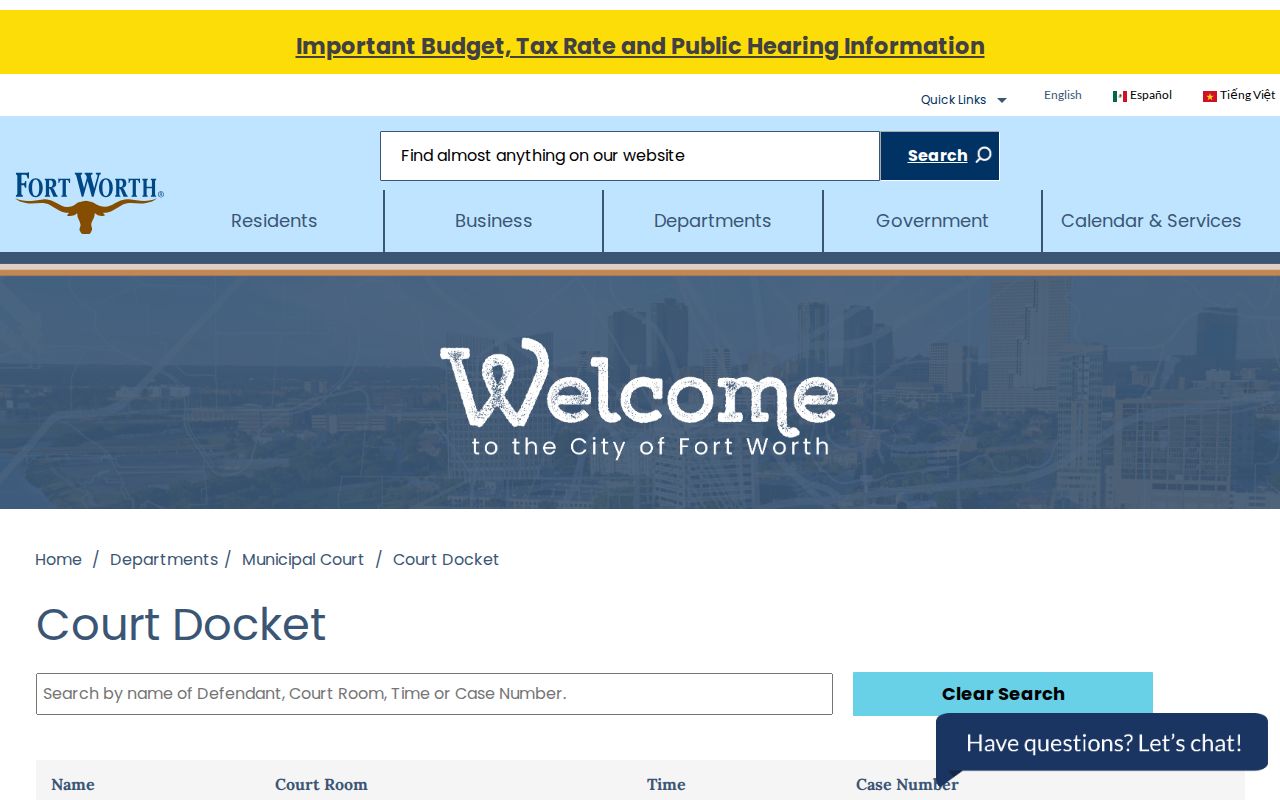
One limit stands out. A calendar match points you to court; it proves no outcome.
Fort Worth Municipal Court Basics
Fort Worth Municipal Court handles city ordinance, parking, traffic, and school-attendance matters within municipal authority. Its main public setting is the A.D. Marshall Public Safety and Courts Building at 1000 Throckmorton Street. The public phone is 817-392-6700. District and county files belong to different keepers entirely.
The A.D. Marshall information page covers the counter and walk-in docket. Walk-in dockets require sign-in and have limited capacity. Arriving at any hour does not guarantee being heard, so ask Fort Worth staff about eligibility and timing.
The official building page adds context for this Fort Worth access point.
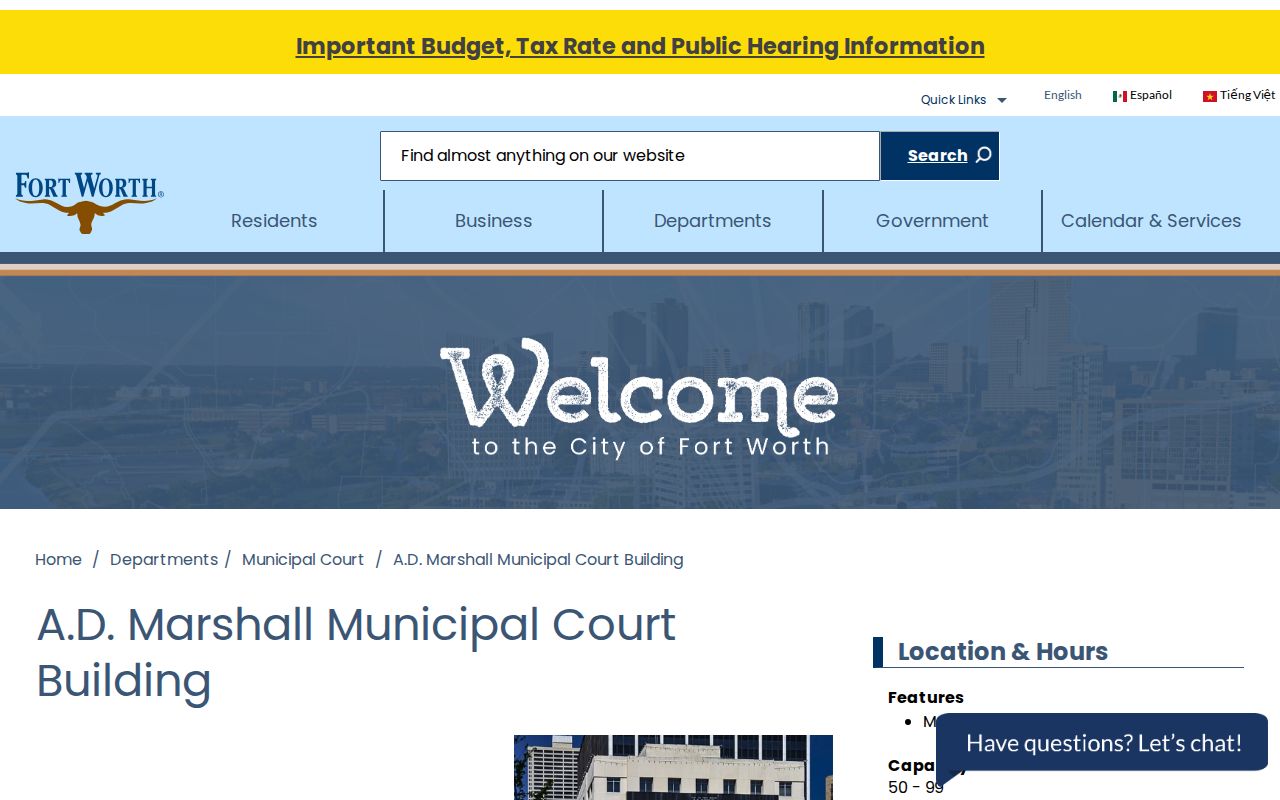
The building is the municipal route; nearby county buildings do not hold the citation file.
Fort Worth Walk-In and Virtual Dockets
Fort Worth runs both walk-in and virtual dockets, and each has limits. The city's virtual court page posts WebEx links and a YouTube route. A public link lets you attend or observe when authorized. It never overrides a judge's directions or limits on recording.
For a walk-in Fort Worth docket, check current hours first. Then sign in as directed and expect capacity limits. For a virtual setting, use the link tied to the right court. Test your access early. Calling or searching a portal does not enter a plea, move a date, or resolve a case.
Note: Confirm the Fort Worth docket format with the clerk. Capacity, links, and court instructions can change.
Court Dates and Settings in Fort Worth
A Fort Worth date tells you when and where an event is set. It says nothing about whether the event happened or the case closed. A reset moves a setting. A continuance does the same. Neither one dismisses the Fort Worth case. If sources disagree, the municipal court controls its own calendar.
| Date | The day assigned to the Fort Worth event. |
|---|---|
| Time | The listed call or individual time. |
| Courtroom | The room shown by the public docket. |
| Judge | The officer assigned when published. |
| Setting Type | An appearance, pretrial, trial, or compliance event. |
Save the case number and the source, then verify again close to the date. Staff can explain current procedure, though a docket line may never say why a setting changed.
Which Fort Worth Court Has It?
Downtown Fort Worth packs several systems into a few blocks. The A.D. Marshall building takes municipal matters. The Tim Curry Criminal Justice Center handles felony and county-criminal work. District civil cases route through the Civil Courts Building. The 1895 Courthouse carries County Clerk and probate context. Federal cases belong to the Northern District of Texas.
| Fort Worth matter | Keeper | Start |
|---|---|---|
| City citation | Municipal Court | City docket |
| Felony or district civil | District Clerk | DCSA |
| County misdemeanor, CCL, probate | County Clerk | Odyssey |
| Federal filing | Federal clerk | PACER |
This routing stops a missing Fort Worth match from becoming a false conclusion. Search the court named on the paper before widening anything.
Traffic Tickets in Fort Worth
A ticket issued into Fort Worth Municipal Court stays with the city court. The Fort Worth docket may list the room, time, and case number. City materials also set a 21-calendar-day response rule for parking citations. That city clock is not a county JP deadline.
Paying and contesting are different choices, and each carries legal effect. Read the Fort Worth instructions and contact the court before paying if another option is under review. The broader Tarrant County traffic-ticket record separates city citations from JP matters, but the Fort Worth clerk remains the source for this city case.
A receipt documents payment. The Fort Worth record documents what happened in court. Keep both, and verify the status reflects the action taken.
Fort Worth Calendar Versus Case File
A Fort Worth calendar answers one question. Which case sits in which room at which time? A records request is different, because it seeks the papers behind that line. When you need an order, a judgment, a plea paper, or a certified copy, the docket alone will not do the job. The docket is just the entry line.
Take the case number from the Fort Worth docket. Put it into the city's current records process. Ask for a named item rather than everything at once. A narrow request is simpler for the clerk to match. And skip sensitive details in an email; no birth dates or license numbers unless they are required.
Note: A Fort Worth event can stay indexed even when its document is redacted, restricted, or simply unavailable online. The index entry stands on its own.
Where Fort Worth Cases Go
City ordinance and Class C matters within its reach start at Fort Worth Municipal Court. Class A and B misdemeanors usually land in a Tarrant County criminal court instead. Felonies and major district cases belong to District Court. For civil and probate, routing turns on the subject and the claim. A Fort Worth address alone does not decide it.
Docket flow: Fort Worth Municipal Court › Tarrant County Courts › District Court
An appeal or transfer creates its own record at the next level. A city entry never becomes a county entry just by swapping the name. Use the new cause number and court. The Tarrant County court docket overview maps the county route. It does not replace the Fort Worth search.
Fort Worth County-Seat Record Paths
Fort Worth became the county seat in 1860. That is why city, county, district, appellate, and federal offices all cluster there. It does not merge their records. A person can stand downtown near the right building and still ask the wrong clerk about a Fort Worth case.
So read the caption on the notice. "Municipal Court" points to Fort Worth itself. A numbered District Court goes to the District Clerk. "County Criminal Court" or "County Court at Law" goes to the County Clerk, and a federal caption belongs with the federal clerk. That one check saves more time than any broad name search.
Fort Worth Court Record Access Rules
Fort Worth court records can be public while certain data and images stay protected. In Texas, case records come from the court or clerk that keeps the case. County operational records may fall under the Texas Public Information Act. Judicial administrative records can follow Rule 12 instead. The routes are not interchangeable.
Key rules:
Texas Government Code Chapter 552 sets public-information policy subject to exceptions.
Texas judicial open-records policy separates case records from other judicial records.
Texas Rule of Civil Procedure 21c protects sensitive data in civil filings.
A missing Fort Worth image can reflect redaction, sealing, juvenile law, or a portal limit. It is not proof that no event exists. Ask the clerk for the proper path.
Confirming a Fort Worth Docket
Verification ends with the office that owns the Fort Worth calendar. Keep the case number, the court, the setting date, and the source together. Put them in one note. Ask whether the room and time are still current. For WebEx, confirm that remote attendance is authorized for that Fort Worth setting.
Never infer guilt, liability, or judgment from a setting. A plea note, warrant flag, reset, or charge needs context. The rest of the Fort Worth record supplies it. A good search note states which source was checked, when, and what the court confirmed.
Fort Worth Docket Source Checks
Fort Worth search results work best when the source and scope stay attached to them. Note whether the item came from the municipal docket, virtual court, A.D. Marshall instructions, DCSA, Odyssey, or a federal system. Write down the date checked. A result from one source should never be described as if every Fort Worth court had been searched.
Ask the Fort Worth clerk to confirm the case number, the current setting, and the records route. When the notice names another court, move to that court's clerk. This discipline keeps a municipal calendar separate from a county file and stops a setting from being misstated as a final outcome.